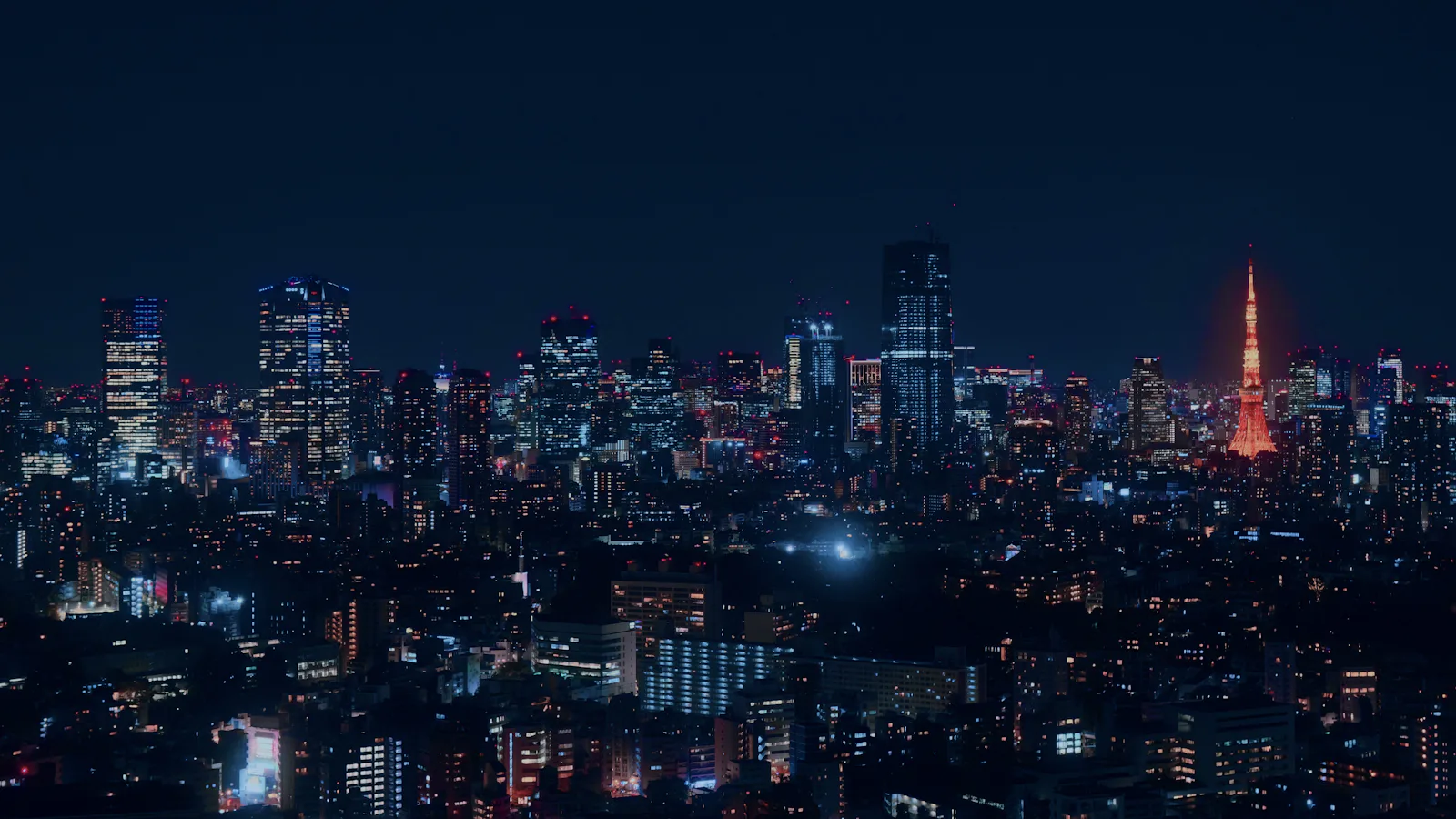
Tokyo's cherry blossoms are photographed to death in daylight and half-ignored after dark, which is the wrong way round. Yozakura — night blossom — is the older tradition and the better spectacle: lantern-lit trees, black water, and petals that read almost white against the city. This guide covers where the after-dark viewing actually happens, how the timing works, and why you cannot plan it more than a few weeks ahead.
When Tokyo's blossoms open
In central Tokyo, first flowering typically arrives in the last week of March, with full bloom — mankai — usually a few days to a week later, so the peak generally falls between late March and the first days of April. The usable window is short: roughly one week at full bloom, and a single day of hard rain or wind can end it.
Those are averages, not a schedule. The bloom shifts by a week or more between years depending on late-winter temperatures, and it is the reason no honest guide publishes fixed dates in advance. Forecasts from the Japanese meteorological services and weather companies start appearing in January and are revised repeatedly through February and March — check them roughly two to three weeks before you travel, and again the week you arrive.
The practical consequence for night viewing: illumination events are announced late. Organisers wait for the bloom forecast before confirming lighting dates, and many run for only seven to ten evenings. Some events have also been scaled back or suspended in recent years. Confirm each location's current plans rather than relying on last season's write-ups, including this one.
Where to see cherry blossoms at night
Meguro River, Nakameguro
The signature Tokyo night-blossom experience: several kilometres of cherry trees leaning over a narrow concrete canal, lit in the evening, with the branches meeting overhead. Reflections in the water are the shot. It is also the single most crowded option — the towpaths are narrow, one-way pedestrian systems are common at peak, and "romantic stroll" is not an accurate description of a Saturday evening. Come on a weekday and start from the quieter southern end rather than at Nakameguro Station.
Chidorigafuchi, Imperial Palace moat
The best composition in the city: cherry trees along the old moat with the palace walls behind, viewed from the Chidorigafuchi Greenway near Kudanshita. Evening lighting has historically been part of the Chiyoda ward blossom festival, and the moat's still water doubles every tree. Rowing boats operate on the moat during the season, with extended hours in some years — worth checking, because being on the water under lit branches is the version people remember.
Ueno Park
About a thousand trees and the most famous hanami ground in Tokyo, with bonbori paper lanterns strung along the central avenue and lit in the evening. It is loud, festive and full of office parties on tarpaulins — closer to a street festival than a contemplative walk. Note that the hanami areas have an evening cut-off, generally around 20:00, so this is an early-evening stop rather than a late one.
Sumida Park, Asakusa
Trees along both banks of the Sumida River with the Tokyo Skytree behind them — the one location that gives you blossom and a modern skyline in the same frame. Evening lighting along the riverside walk, and less oppressive crowding than Meguro or Ueno.
Roppongi and Tokyo Midtown
The most comfortable option: lit blossom along Sakurazaka and through the Midtown grounds, with actual toilets, cafés and space to stand. Fewer trees and a more corporate atmosphere, but if you have one evening and no appetite for crowd management, this is the sane choice.
Where not to go after dark
Shinjuku Gyoen is one of the great blossom gardens in Japan and closes in the late afternoon, with no night illumination and alcohol prohibited — a superb daytime visit and a wasted evening. Aoyama Cemetery's avenue is beautiful and essentially unlit, which makes it atmospheric to walk and near-impossible to photograph. Check closing times before building an evening around any park.
Shooting yozakura
- Expose for the petals, not the scene. Lit blossom against a dark sky fools meters badly; underexpose by a stop or check the highlight warning and pull back until the white stops clipping.
- Fast lens over tripod. Tripods are restricted or impractical at most of these sites — the paths are packed and often explicitly prohibit them. An f/1.8 lens and ISO 3200 is the workable combination.
- Use the water. At Meguro and Chidorigafuchi, the reflection is the difference between a snapshot and a photograph.
- Mixed light is the real problem. Lanterns, LED floods and sodium street lamps in one frame will not white-balance together. Shoot raw and accept that the colour will need work.
- Blue hour beats full night. The twenty minutes when the lanterns are lit but the sky still holds deep blue give you separation between blossom and background. After that the sky goes black and flat.
Etiquette
The trees are the point and they are fragile. Do not pull branches down for a photograph, do not shake them for falling petals, and do not climb anything. Several parks ban alcohol outright and others ban reserving ground with tarpaulins; both rules are posted and both are enforced. Take your rubbish with you — bins are deliberately scarce. On narrow paths like the Meguro towpath, stopping dead to compose a shot creates a genuine crush behind you, so step aside first.
Frequently Asked Questions
When is the best time to see cherry blossoms at night in Tokyo?
Late March to the first days of April in most years, during the roughly one-week full-bloom window. Because the bloom shifts by up to a week or more between years, check the season's forecast two to three weeks out and again on arrival. Within a given evening, the blue-hour period just after sunset is the best light.
Where are the best night cherry blossom illuminations in Tokyo?
The Meguro River at Nakameguro for lit trees over water, Chidorigafuchi on the Imperial Palace moat for the finest composition, Ueno Park for lantern-lit festival atmosphere, Sumida Park for blossom with the Skytree, and Tokyo Midtown or Sakurazaka in Roppongi for a comfortable, less crowded evening.
Are the illuminations free?
The major riverside and park locations — Meguro River, Chidorigafuchi, Ueno, Sumida Park — are free public spaces with no admission. Some gardens that run paid evening openings charge a modest entry fee, and boat rental at Chidorigafuchi is charged separately.
Is Shinjuku Gyoen open at night for cherry blossoms?
No. Shinjuku Gyoen closes in the late afternoon and does not run night illumination, and alcohol is prohibited inside. Visit it during the day and choose a different location for the evening.
How crowded is night hanami in Tokyo?
Very, at the famous spots. The Meguro River towpaths and Ueno's central avenue are shoulder-to-shoulder at peak bloom on a weekend evening, with one-way pedestrian flow imposed in places. Weekday evenings are markedly better, and Sumida Park or Midtown are the realistic options if crowds are a problem.
Do I need a tripod to photograph cherry blossoms at night?
No, and at most Tokyo locations you should not plan on using one — the paths are too crowded and tripods are frequently prohibited. A fast lens at f/1.8 with ISO pushed to 3200 handles lantern-lit blossom comfortably.
What does yozakura mean?
Yozakura means "night cherry blossom" and refers to the practice of viewing blossom after dark, usually under lanterns or floodlighting. It is an old tradition in Japan, not a modern tourist invention, and the illuminations at Ueno and Chidorigafuchi are its direct descendants.