Tokyo overwhelms first-timers with its sheer scale, and the usual mistake is trying to see everything at once. A focused three-day plan lets you feel the city's different rhythms without burning the day in transit. This itinerary groups each day by area — traditional east Tokyo, modern west Tokyo, and a Shinjuku night — so you move less and see more. If you land after the trains stop, our late-night airport guide covers that first leg; for choosing when to come, see the best time to visit Tokyo.
Day 1: Eastern Tokyo and traditional culture
Start in Asakusa, the historic heart of the city. Senso-ji, founded in 645, is Tokyo's oldest temple; arrive before about 8:30 AM to beat the crowds. The approach, Nakamise-dori, is a ~250-metre lane of stalls selling snacks like ningyo-yaki, little cakes filled with sweet red-bean paste. Entry to the temple is free.
From there, walk along the Sumida River toward the Tokyo Skytree, a 634-metre broadcasting and observation tower. The Tembo Deck sits at 350 metres and costs around ¥2,100 for adults; on a clear day you can pick out Mount Fuji, roughly 100 km to the west. It is worth the ticket for the view alone.
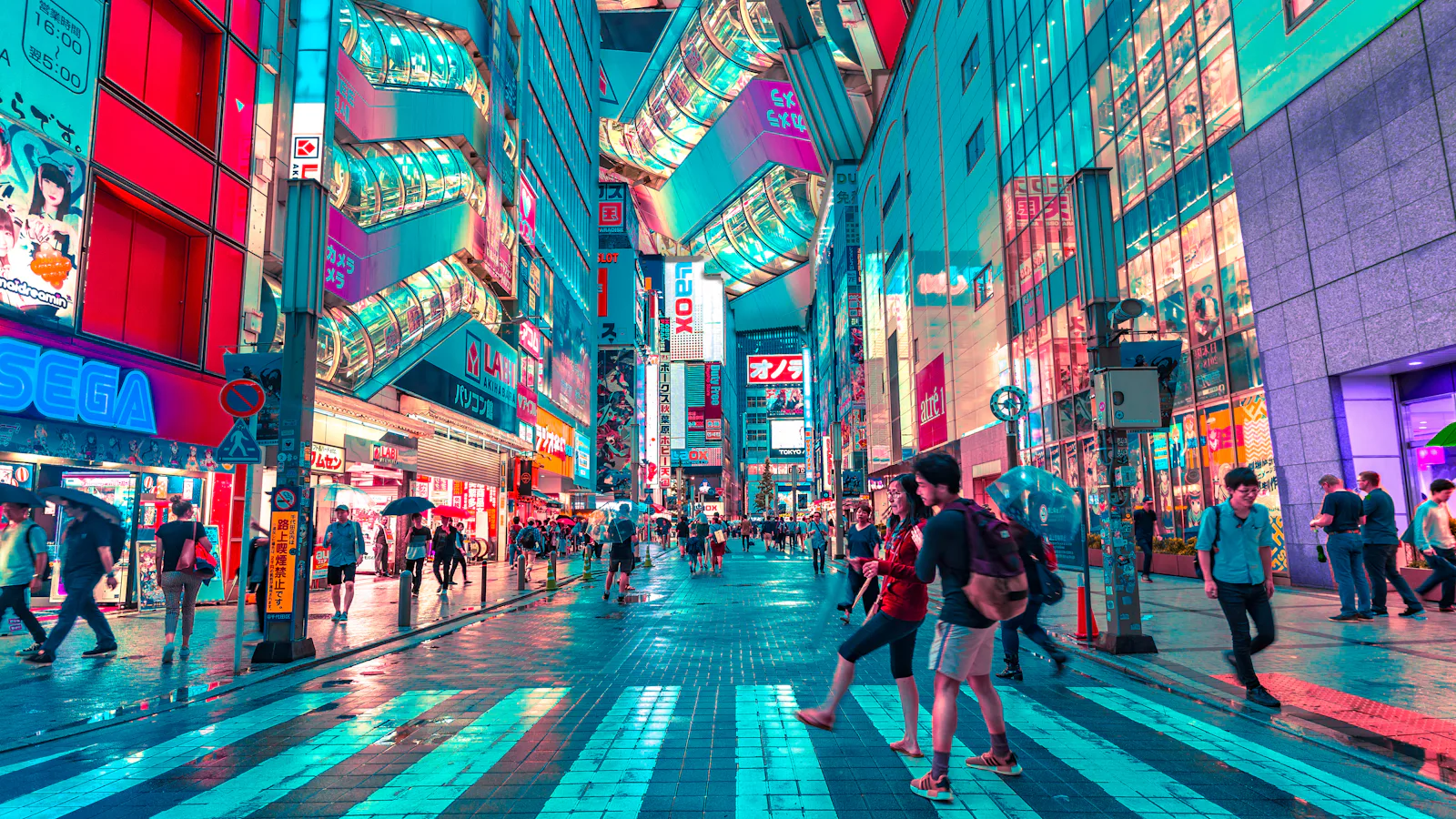
For lunch, head to nearby Ueno, known for the Tokyo National Museum and the sprawling Ueno Park, which fills with cherry blossoms in early April. Casual spots around the park serve tonkatsu or ramen for about ¥1,000–1,500. In the afternoon, ride to Akihabara — the centre of otaku culture, with multi-storey arcades, electronics shops and maid cafes along Chuo-dori. Even if anime is not your thing, the neon and the retro game consoles are worth a wander; the Radio Kaikan building is a good first stop. Come back once it is dark if the evening allows: the floors fill, the frontages come on, and the district turns into a different place — we cover it in Akihabara arcades at night.
- Buy a Suica or Pasmo IC card on arrival — it works on trains, buses and in convenience stores.
- Reach Senso-ji before 8:30 AM for photos without the mid-morning crush.
- Book the Skytree online if you want a specific time slot on a clear day.
- Wear comfortable shoes — you will easily walk 15,000+ steps a day.
Day 2: Modern Tokyo and urban views
Shift west. Begin in Shibuya at the Scramble Crossing, where up to 3,000 people cross at once during peak hours; the free view from the Starbucks in the Tsutaya building is the classic one. For the aerial angle, go up Shibuya Sky on the 46th floor of Shibuya Scramble Square — an open-air terrace with 360-degree views, around ¥3,000 and best booked weeks ahead for a sunset slot.
Walk to Harajuku via the edge of Yoyogi Park. Takeshita-dori is the loud teen-fashion strip, while the calmer Ura-Harajuku backstreets hide independent labels. Nearby, Meiji Jingu — the shrine to Emperor Meiji and Empress Shoken — sits in a dense planted forest of some 120,000 trees; entry is free and it is a genuine quiet break from the crowds.
From Harajuku, stroll down Omotesando, the tree-lined avenue often called Tokyo's Champs-Élysées, where luxury flagships were designed by famous architects — worth seeing even if you do not shop, especially lit up at dusk. For dinner, drop into the backstreets of Daikanyama or Nakameguro for a more grown-up scene; small sushi bars and kappo places start around ¥5,000 a head.
Day 3: Shinjuku, gardens and nightlife
Spend the morning in Shinjuku Gyoen, a 58-hectare park blending Japanese, French and English gardens and one of the city's best cherry-blossom spots; entry is ¥500 and it closes in the late afternoon, so go early. For a free skyline view, ride up the Tokyo Metropolitan Government Building observation deck — no ticket needed, and Fuji shows on a clear day.
As evening comes, move to the west side of Shinjuku Station for Golden Gai, a warren of 200-plus tiny bars, many seating only six to ten people, each with its own theme. Most charge a cover (an otōshi seating charge, often ¥500–1,500) that usually comes with a small snack. Just north, Omoide Yokocho is a smoky lane of yakitori stalls — a lively, no-frills spot for dinner.
For later nightlife, Kabukicho is Tokyo's loudest entertainment district; ignore the touts and stick to reputable venues such as the live-music club Shinjuku Loft or the Golden Gai bars for something more intimate. When you are done, check the last train guide — most lines stop between about midnight and 1:00 AM.
Practical tips for first-timers
The subway is the best way around, and an IC card saves fumbling for tickets. Signs and menus are widely in English, and many restaurants have ticket machines with pictures, so ordering is easy even without Japanese.
Two decisions save real money. First, skip the nationwide Japan Rail Pass if you are only in Tokyo — it covers JR lines between cities and does nothing for the subway, so across three days in one city it cannot pay for itself. An IC card plus the occasional Metro day ticket is the right combination. Second, base yourself on the Yamanote loop rather than chasing a cheaper room further out: Shinjuku, Shibuya, Tokyo or Ueno put you within twenty minutes of nearly everything in this itinerary, and three days is too short to spend an hour of each of them commuting.
- Convenience stores (7-Eleven, Lawson, FamilyMart) do genuinely good meals under ¥500 — onigiri, bento and coffee.
- Tipping is not customary and can feel awkward; the listed price is what you pay.
- Carry cash — many small restaurants, shrines and machines still do not take cards.
- A Tokyo Metro 24-hour ticket (around ¥600) pays off if you make several rides in a day.
Skip the JR Pass unless you are also taking several Shinkansen trips — at about ¥50,000 for seven days it rarely pays off for a city-only stay. Learning "arigatou gozaimasu" (thank you) and "sumimasen" (excuse me) goes a long way in smaller places.
Frequently Asked Questions
Is three days enough for Tokyo?
For a first visit, yes — three days covers the major neighbourhoods (Asakusa, Shibuya, Shinjuku) and the city's main contrasts without feeling rushed. Tokyo has far more, including day trips to Kamakura or Nikko, but those need extra time.
What is the best way from Narita to central Tokyo?
The Narita Express (N'EX) reaches Tokyo Station in about 60 minutes for around ¥3,070 and is covered by the JR Pass. The Keisei Skyliner is faster to Nippori/Ueno at roughly ¥2,570. If you land after the trains stop, see our late-night arrival guide.
Do I need to book restaurants in advance?
For popular or high-end places, yes — dinner slots can fill weeks ahead. For casual ramen shops, izakaya and convenience stores, walking in is fine. Google Maps and apps like TableCheck help find open tables.
Is Tokyo safe for solo travellers?
Very. Violent crime is rare and pickpocketing uncommon, though the usual care in crowds applies. The city is well lit and easy to navigate after dark.
Is the Japan Rail Pass worth it for three days in Tokyo?
No. The nationwide pass is priced for long-distance travel between cities on JR lines, and it does not cover the Tokyo Metro or Toei subway lines this itinerary mostly runs on. For a Tokyo-only trip, use a Suica or Pasmo IC card and add a Metro 24-hour ticket on the days you make several journeys. The pass only starts to make sense once you add Kyoto, Osaka or another shinkansen leg.