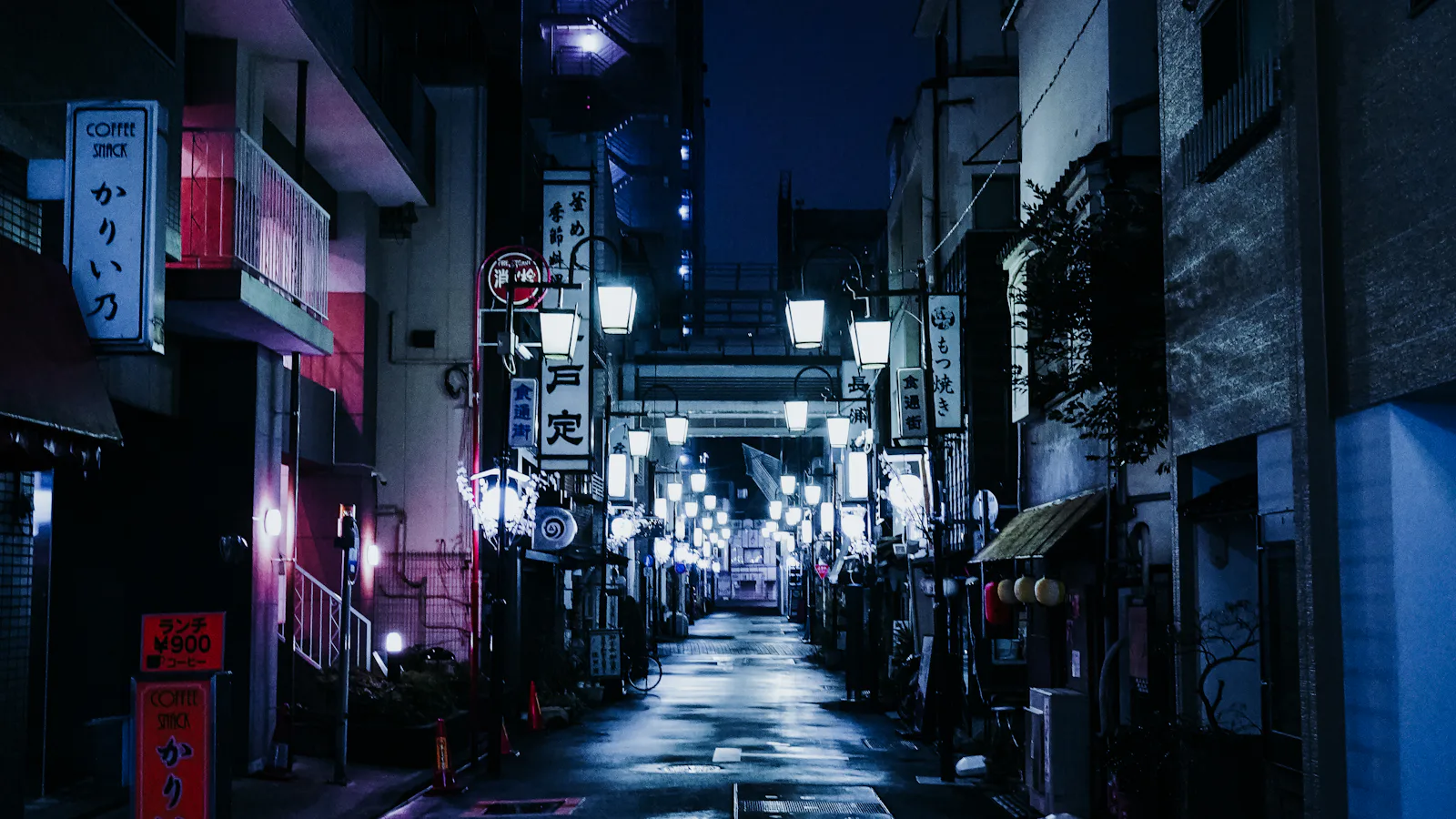
Eight seats, one cook, no menu in English. The best bowl we had all trip was almost an accident — a shop found at 3:40am because the trains had stopped and the alternative was sitting in a convenience store. Shinjuku at that hour is the best ramen district in the world, largely because everyone still awake is either working, drunk or hungry, and the shops that stay open are built for exactly those three states.
Why 4am is the right time
Shinjuku's trains stop somewhere between midnight and 01:00 and do not restart until around 05:00. That four-hour gap creates a captive population, and a specific category of ramen shop exists to serve it: counter-only, cash-only, no reservations, no atmosphere, extremely good. Between 02:00 and 04:00 the queues that plague the famous shops at lunchtime have gone, and you can walk into places that would cost you forty minutes of standing in daylight.
The trade-off is that you are choosing from what happens to be open rather than from a shortlist. That is the whole appeal — but it helps to know the reliable anchors before you start walking.
Distance matters more than it sounds at that hour. Almost everything worth eating sits within a fifteen-minute walk of the station's east side: Kabukicho spreads north from the Yasukuni-dori crossing, Golden Gai sits along its eastern edge, and the Hidakaya-type shops are scattered on the main roads between them. The west side, around the government towers, empties out completely and is not worth crossing for. Pick a direction from the east exit and work that pocket, rather than zig-zagging across the district on the strength of one review.
Where to actually go
Hours in this business change without notice, so treat these as starting points and confirm on the day rather than crossing the district on faith.
- Ichiran, Kabukicho — the branch most visitors default to, and for good reason at 04:00: it runs around the clock, the ordering is done on a paper form with English, and the solo booths mean nobody needs to talk to you. Tonkotsu, consistent, not the most interesting bowl in Shinjuku but never a bad one.
- Nagi, Golden Gai — up a narrow staircase in the bar district, open through the night, and a genuinely distinctive bowl: niboshi ramen, heavy with dried sardine. Pungent, salty, divisive, and the right thing after drinking. Roughly ten seats.
- The Hidakaya chains — cheap Chinese-style noodle shops scattered across Shinjuku, many open extremely late or continuously. Not destination ramen; excellent insurance at 04:30 when you want food, not a pilgrimage.
- Kabukicho's unnamed counters — the ones worth finding. Look for a lit doorway, a ticket machine visible from the street, and three or four people eating in silence. If the shop has a queue at 03:00, join it.
What to skip after midnight: Omoide Yokocho largely shuts earlier and is yakitori rather than ramen, and the celebrated daytime shops around Shinjuku-sanchome mostly close by 22:00 or 23:00. Chasing a specific famous name at 4am usually ends in a closed shutter.
How to order from a ticket machine
Most late-night shops use a shokkenki — a vending machine by the door that takes your money and prints a ticket you hand to the cook. It looks like a wall of unreadable buttons and it is genuinely simple.
- Put cash in first. The buttons stay dark until the machine has your money.
- The top-left button is almost always the house ramen. If you read nothing else, press that.
- Buttons with photographs are sets; small buttons in the lower rows are toppings — ajitama (seasoned egg), extra chashu pork, nori, negi.
- Take the ticket and your change, sit down, and put the ticket on the counter. The cook will take it when ready.
- Ask for kaedama — a second serving of noodles, usually ¥100–150 — while you still have broth left. It only works in that order.
Bring cash. A surprising number of these shops still refuse cards, and the machine will not take a phone.
Counter etiquette
- Slurping is fine and faintly expected. Talking on the phone is not.
- Eat and leave. Twenty minutes is a long visit; the seat is the shop's only inventory.
- Put your bag on the hook or the rack, not the neighbouring stool.
- Return your bowl to the raised part of the counter and say thanks on the way out.
- Do not photograph the cook or other diners. The bowl is fair game.
What to order when you cannot read anything
Four words cover most menus. Shoyu is soy-based and clear, the safe default. Miso is thicker and sweeter, best when it is cold outside. Tonkotsu is the opaque pork-bone broth most visitors think of as ramen. Tsukemen arrives as noodles and dipping broth in separate bowls — excellent, but not what you want half-asleep at 4am.
If you have been drinking, order shoyu or the niboshi bowl and skip the heaviest tonkotsu. Your judgement at that hour is worse than you think, and so is your stomach's.
One warning if you do not eat pork. Late at night the choice narrows to exactly the shops least able to accommodate you: most broths are pork-bone or a pork-and-chicken blend, shoyu and miso are usually built on the same base, and the chashu is pork by default. Asking for a bowl without meat rarely changes the broth. Shinjuku does have vegan and vegetarian ramen shops, but they keep ordinary daytime hours — so if that is a constraint, eat before midnight or fall back on a convenience store.
Frequently Asked Questions
Is there 24-hour ramen in Shinjuku?
Yes. The Ichiran branch in Kabukicho operates around the clock, Nagi in Golden Gai runs through the night, and several Hidakaya-style noodle chains keep very late hours. Hours do change, so confirm the specific branch on the day rather than assuming.
What time do the trains stop in Shinjuku?
Last trains run between roughly midnight and 01:00 depending on the line and direction, and service resumes around 05:00. That gap is why the late-night food scene exists. Our guide to Tokyo's last train covers what to do with the hours in between.
How much does late-night ramen cost in Tokyo?
A standard bowl runs roughly ¥900–1,300, with toppings at ¥100–200 each and extra noodles about ¥150. There is no late-night surcharge. Budget ¥1,500 for a bowl, a topping and a beer.
Do Shinjuku ramen shops take credit cards?
Many still do not, particularly the small counter shops that are open at 4am, and their ticket machines are frequently cash-only. Carry ¥1,000 notes and some coins.
Do I need to speak Japanese to order ramen?
No. Most late-night shops order through a ticket machine, where the top-left button is the house bowl and pointing works for everything else. Ichiran uses a paper order form available in English. Nobody expects conversation at a ramen counter.
Is Shinjuku safe at 4am?
Shinjuku is busy and generally safe at that hour, but Kabukicho is the one part of it that warrants ordinary caution: ignore touts entirely, never follow anyone to a bar you did not choose, and avoid places without posted prices. Walking between lit main streets and a ramen counter is not the risky part of the night.
Where can you wait for the first train after eating?
The bowl only fills twenty minutes of a four-hour gap. Kabukicho's net cafes and karaoke boxes sell night packages, the larger convenience stores tolerate a long coffee, and a handful of 24-hour cafes sit around the east exit. Waiting inside the station itself is not an option, because it closes. If you have three hours to fill rather than one, a capsule hotel usually works out cheaper than a taxi.