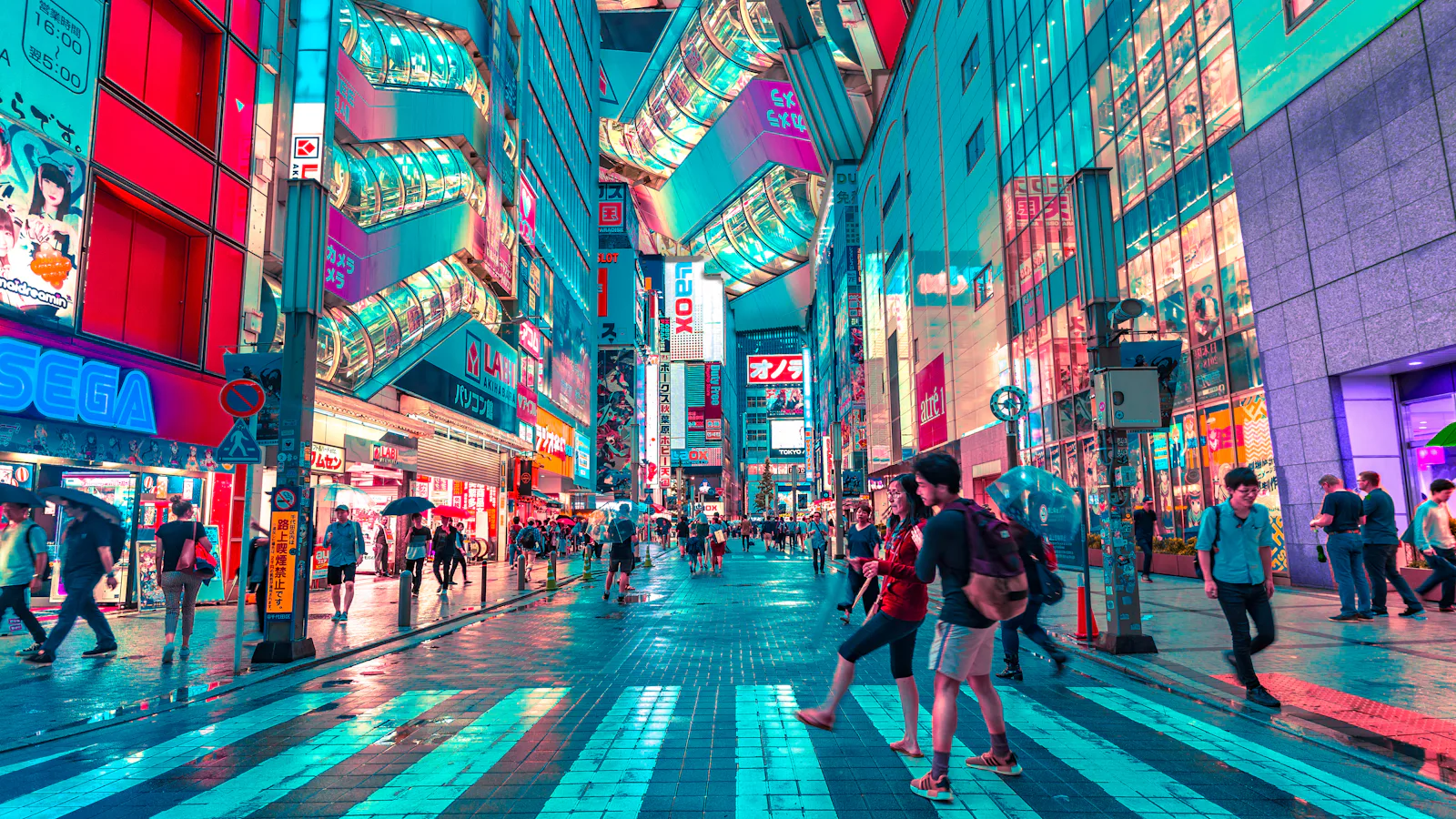
Akihabara after dark does something no photograph quite conveys: the game centres turn the street into a light source. Five or six floors of screens per building, glass frontages, and a sound wall of rhythm games audible from the pavement. Japan has been closing arcades for two decades, but a handful of the big ones in Akihabara are still doing genuine business — and walking into them at night is the single cheapest good evening in Tokyo.
Where the arcades are
Everything worth your time sits within a few minutes of Akihabara Station, mostly along or just off Chuo-dori, the main road running north from the Electric Town exit. You do not need a map so much as a habit of looking up: the arcades announce themselves as vertical stacks of light.
- GiGO — the biggest presence in the district, spread across several numbered buildings. These were the Sega arcades until the business changed hands in 2022 and the towers were rebranded; the interiors are much the same. GiGO No. 3 is the one most people mean when they talk about the crane-game building.
- Taito Station — a full-range arcade on Chuo-dori, strong on rhythm and music games, with the reliable Taito layout: prizes low, games high.
- Hey (Hirose Entertainment Yard) — a side-street institution and the reason serious players come to Akihabara at all. Its upper floor is one of the last places on earth with a working wall of vertical shooters, plus classic fighting cabinets and a crowd that knows what it is doing.
- Super Potato — primarily a retro game shop, with a small paid retro arcade on its top floor. Worth knowing that it keeps shop hours and closes in the evening, so do this one before dinner rather than after.
How a Japanese game centre is stacked
The floor layout is close to standardised, and knowing it saves you riding the lift blind.
- Ground floor — crane games. UFO catchers full of plush, figures and snacks. Loud, bright, aimed at passing trade, and where most of the district's money is actually made.
- Lower-middle floors — more crane games and medal games. Medal games are the coin-pusher and horse-racing machines; a small pile of medals lasts a long time and they are quietly the best value in the building.
- Middle floors — rhythm and music games. Taiko drums, maimai, Chunithm, Sound Voltex, dance platforms. This is the noise you heard from the street, and the skill level on display is intimidating in the best way.
- Upper floors — fighting games, shooters, racing, retro. Quieter, older, more male, more serious. Cabinets sit in versus pairs, back to back.
- Top floor — photo booths. Purikura, heavily decorated, and frequently posted as women-and-couples only. That rule is real and it is enforced, so read the sign before walking in.
The crane games on the way in deserve one deliberate attempt rather than five random ones. Prizes are set so that a single grab almost never lifts them clear; the machines are built around nudging an item across its shelf or off its peg over several tries. So watch what a machine has been left in — a prize already sitting half over the edge is somebody else's abandoned progress and the best odds in the building. Staff will reposition a prize if you point and ask, which is normal rather than cheeky, and some machines post a rule that an attendant helps you win after a set number of attempts. Where that sign exists, it is real.
What it costs, and how to pay
A single play is typically ¥100, some newer cabinets ¥200. Crane games run ¥100 to ¥500 a go depending on the machine. A genuinely full evening — a few rhythm tracks, a round of medal games, one doomed attempt at a crane prize — comes in under ¥2,000, which puts an arcade night near the bottom of the price range for a night out in this city. Our guide to Tokyo after dark on a budget puts it beside the alternatives.
Bring ¥100 coins. Many cabinets are coin-only, change machines are common but not universal, and hunting for a working one on the fifth floor of a busy arcade at 22:00 is a bad use of your night. If you plan to play the big network titles repeatedly, the operators sell IC cards — Konami's e-Amusement Pass, Bandai Namco's Banapassport, Sega's Aime — which save your scores and settings between visits. For one night in town they are not worth it.
Opening hours: the mistake to avoid
Akihabara is not an all-night district. Most game centres open around 10:00 and close between 23:00 and midnight, and staff start winding floors down before that. Visitors who plan a 2am arcade crawl on the strength of Tokyo's reputation end up outside a shuttered building looking at their phone. The trains outlast the arcades here, but not by as much as people assume — see when the lines stop running before you commit to one more round.
The best window is 19:00 to 22:30. The neon is fully on, the after-work crowd has arrived and the good players are on the upper floors, but you still have time to ride to the top of two or three buildings. If you want the district genuinely quiet, come on a weekday before 18:00 instead — the light is worse and the atmosphere is better.
Arcade etiquette
- Do not stand directly behind someone playing a fighting or rhythm game, and never touch a cabinet that is in use.
- A bag or a card left on a cabinet means the seat is claimed. Leave it alone.
- Drinks belong in the holders provided, not on the control panel. Some floors ban food entirely.
- Indoor smoking is now restricted by law, and arcades are non-smoking except in marked rooms — a real change from the Akihabara of ten years ago.
- Filming other players without asking is poor form even where photography is allowed; several arcades post no-photography rules on the game floors.
Frequently Asked Questions
Are Akihabara arcades open 24 hours?
No. Most open around 10:00 and close between 23:00 and midnight, with floors closing progressively before the final shutdown. Akihabara is an evening district rather than an all-night one — for genuinely late hours you want Shinjuku or Shibuya.
How much do Akihabara arcades cost?
Usually ¥100 per play, with some newer cabinets at ¥200 and crane games between ¥100 and ¥500 per attempt. There is no entry fee to any arcade. A full evening across two or three buildings costs under ¥2,000 if you are not chasing prizes.
Which is the best arcade in Akihabara?
For range and sheer scale, the GiGO buildings and Taito Station on Chuo-dori. For serious retro and arcade shooters, Hey (Hirose Entertainment Yard) on the side streets is the one enthusiasts travel for. Super Potato is a shop with a small retro arcade on top, and it closes early.
Do Akihabara arcades take cards or IC cards?
Cabinets are largely coin-operated, so carry ¥100 coins. Change machines are widely available inside. The IC cards sold in arcades — e-Amusement Pass, Banapassport, Aime — store your progress on networked games rather than acting as payment for everything, and are only worth buying if you will play those titles repeatedly.
Can I take photos inside a Japanese arcade?
It depends on the floor, and several arcades post no-photography signs on their game floors. Shooting the exteriors and the street is fine. Filming individual players without permission is not acceptable, and purikura floors are frequently restricted to women and couples.
Is Akihabara worth visiting at night?
Yes, specifically for the light: the stacked arcade frontages along Chuo-dori are the reason the district photographs the way it does, and they are only at full strength after dark. Just plan around a closing time near midnight rather than assuming it runs until dawn.
How do you actually win at a Japanese crane game?
Rarely in a single grab — the machines are not set up for it. The usual route is to move a prize across its shelf or off its peg over several attempts, so pick one that another player has already left in a promising position and continue it. Staff will reposition a prize if you point and ask, and some machines post an assisted-win rule after a set number of tries. Budget ¥1,000 for a serious attempt and stop there.