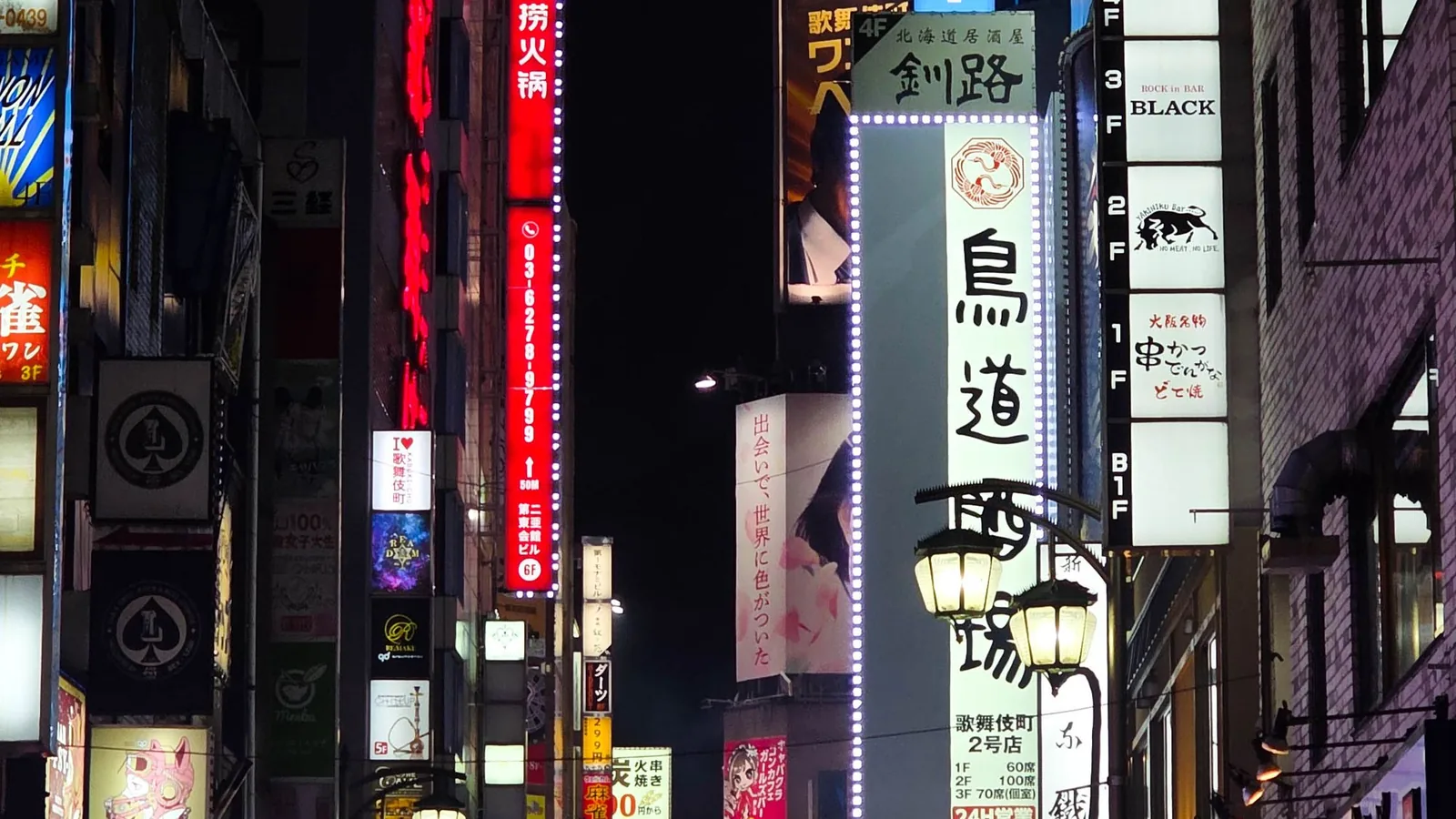
Tokyo never truly sleeps, but Shinjuku is where the pulse beats loudest after dark. As the sun drops, the massive Godzilla head atop Hotel Gracery Shinjuku lights up, signalling the start of a nocturnal spectacle that pulls in millions of visitors a year. Kabukicho is not just a cluster of bars and clubs; it is a labyrinth of neon, hidden alleys and distinct subcultures that define Tokyo nightlife. Navigating it takes more than a taste for fun — it takes awareness, respect for local customs, and an eye for the real gems among the sensory overload.
The district is often misread by tourists who see only the flashy signage and miss the structure underneath. Knowing the difference between a legitimate izakaya and a trap bar is the single most useful skill to have before you step onto the street. This guide breaks Kabukicho into its essential layers — from its history to practical safety — so your night out is memorable for the right reasons.
The anatomy of neon: zones and subcultures
Kabukicho is not a monolith. It is a dense grid of streets, each with its own character. The main artery, Kabukicho-dori, is the most visible and tourist-friendly stretch, home to the Godzilla head, large cinema complexes and major hotels. It is relatively safe and easy to navigate for first-timers. Venture a block off it, though, and the atmosphere shifts sharply.
Deeper in, the streets narrow and darken, with love hotels, adult venues and high-pressure touts. The contrast is jarring: one moment a convenience store, the next a wall of neon and aggressive solicitation. It helps to think of the district in rough zones.
- Kabukicho-dori (main street): well-lit, chains, cinemas and the Godzilla head — best for photos and casual dining.
- East, toward Shinjuku Station: more mid-range dining, karaoke boxes and easygoing venues.
- The deeper north and west blocks: the heart of the nightlife, hostess clubs and the most intense neon — the area to be most cautious in.
- The Golden Gai side: tiny, characterful bars just east of Kabukicho, a slightly older, quieter crowd.
Each zone runs on a different rhythm. The main street stays busy until midnight; the inner alleys run into the early hours. If you want a quiet drink, stick to the eastern edge or the Golden Gai side. If you want the full sensory overload, the inner blocks deliver — but keep a firmer grip on your bearings and your wallet.
Avoiding the trap: recognising solicitation tactics
The real risk in Kabukicho is not violent crime — it is financial loss through deceptive bars. Street solicitation is legally restricted but persists in a grey area. Touts, often in sharp suits, stand outside venues promising cheap drinks or company. It is almost always a trap.
These places, known in Japanese as "bottakuri" bars, run on a model that exploits language barriers and social pressure. The menu looks cheap, but the final bill piles on charges for ice, table fees and mandatory "service" that can reach hundreds of dollars. Refusing can bring intimidation, though serious violence is rare — the pressure is the weapon. If you feel cornered, leave immediately and do not argue.
Red flags
You can usually spot a trap before you step inside. If someone approaches you on the street with a specific deal, walk away — legitimate places do not need to solicit like that. Be wary of venues with no clear menu displayed outside; transparent pricing is a hallmark of honest ones. Generic English names like "Tokyo Bar" or "Shinjuku Lounge" are often aimed at tourists who cannot read Japanese. A line of locals waiting outside, by contrast, is usually a good sign.
Dining and drinking: where locals actually go
For a genuine night out, skip the touts and head for the izakayas and yakitori counters in the smaller lanes. Izakayas are Japanese pubs where people drink beer, sake or shochu over small shared plates, in a casual, noisy, communal atmosphere. Yakitori — skewered chicken grilled over charcoal — is the staple, and the smoke and clinking glasses make a lively backdrop for conversation. Many spots seat only a handful of people at the counter, which makes it easy to fall into conversation with the owner or a salaryman unwinding after work.
A short walk east, the tiny bars of the Golden Gai are worth the trip; our guide to Golden Gai for first-timers covers which of its 200-odd bars actually welcome newcomers. For an atmospheric, low-risk meal, the yakitori lane of Omoide Yokocho, by Shinjuku's west exit, is another reliable pick. As a rough gauge, a set meal at a mid-range izakaya runs around 2,500 JPY including a drink — fair for the quality and portions.
Etiquette in Japanese bars
A little etiquette goes a long way. Do not pour your own drink; pour for others and let them return the favour — the ritual builds rapport. When receiving a pour, hold your glass with both hands. Izakayas are lively, but shouting or disruptive behaviour is frowned on, and space is tight, so keep your belongings close.
Safety and navigation
Safety in Kabukicho is generally high, thanks to a visible police presence and heavy surveillance. The Tokyo Metropolitan Police run a substation in the area and officers patrol regularly. Still, the density and intensity can invite minor issues like pickpocketing, so stay aware.
Navigation is the bigger challenge: neon obscures street signs and GPS gets unreliable in the narrow lanes. Download an offline map, or photograph your hotel's location and nearby landmarks before you head out. Note the last-train situation too — most lines run their final services around midnight to 1:00 AM, and missing them means a taxi, with a short ride to nearby areas costing roughly 1,500 to 2,000 JPY. If you would rather build the whole evening around free sights and cheap eats, see our budget guide to Tokyo after dark.
Emergency resources
In an emergency, dial 110 for police or 119 for ambulance and fire. Small police boxes, known as "koban," are dotted throughout Shinjuku with direct lines to the police and often some multilingual help. The Tokyo Metropolitan Government also runs a multilingual consultation service. Save these before your night out, trust your instincts, and if something feels off, move to a busier, well-lit street. For official visitor information, Tokyo's official tourism site is a solid reference.
From theatre to neon: a little history
The name Kabukicho means "theatre town." In the early 20th century there were plans to make the area a hub for kabuki and the performing arts; the theatre itself was never built, but the name stuck. After the war the district grew into an entertainment zone, and the rise of hostess clubs and neon signage turned it into a symbol of postwar Tokyo. That duality — tradition beside spectacle — is still its defining quality. Toho Cinemas Shinjuku, opened in 2015 with the now-famous Godzilla head, has quickly become one of its landmarks.
Frequently asked questions
Is Kabukicho safe for solo female travellers?
Broadly yes, but solo female travellers should take extra care. Avoid narrow, dimly lit alleys late at night, stick to main streets and reputable venues, and politely decline touts and keep walking. Trust your instincts and stay out of isolated spots.
What is the best time to visit Kabukicho?
A weekend evening between about 8:00 and 11:00 PM is when the district is liveliest and the neon at its brightest. Weekdays are quieter, which some prefer for a more relaxed night. Major holidays can get overwhelmingly crowded.
Do I need a reservation for bars in Kabukicho?
For most izakayas and casual bars, no. For popular Golden Gai bars or specific themed spots, reservations are recommended and can often be made through your hotel. Walking in without one may mean a wait or being turned away.
How much should I budget for a night out in Kabukicho?
It varies with your choices. A casual izakaya night runs about 3,000 to 5,000 JPY per person with food and drinks. High-end hostess clubs cost far more, often starting at 10,000 JPY or more. Set a budget before you go and stick to it.
Can I use credit cards in Kabukicho?
Larger venues often take cards, but smaller izakayas and bars are frequently cash-only. Carry enough yen, especially if you plan to hop between venues. ATMs at convenience stores and Shinjuku Station accept foreign cards, though with withdrawal limits.
Final tips
Before you step into the neon, take a beat to get your bearings. The most valuable rule in Kabukicho is to stay observant and polite: do not engage with street touts, however persuasive, and seek out the spots locals actually frequent. Start the night with a loose plan but leave room for the unexpected — the best memories here are usually made in a counter you did not plan to find.