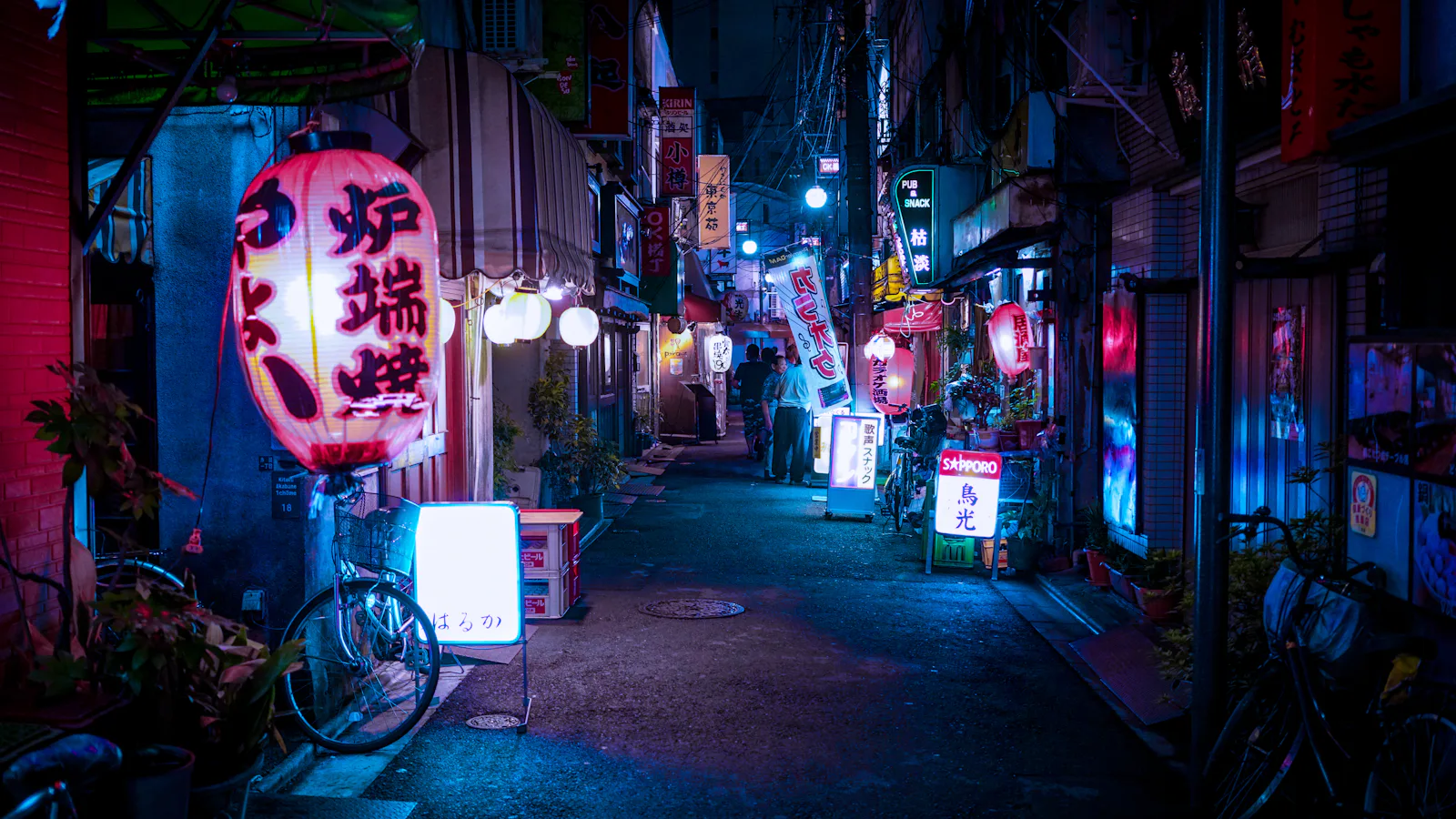
The narrow lanes of Omoide Yokocho pulse with a smoky, low-lit energy that feels a world apart from the glass towers of west Shinjuku just outside. A two-minute walk from the west exit of Shinjuku Station, this cluster of tiny eateries is nicknamed "Piss Alley" — a rough translation of its older name, Shomben Yokocho, from the days when the buildings were packed too tightly for indoor toilets. Today it is one of Tokyo's most atmospheric places to eat: a 150-metre run of cramped counters where diners sit shoulder-to-shoulder under flickering neon, grilling smoke drifting between the beams. This is less about fine dining and more about the raw, communal joy of yakitori and cold beer in a space that still feels like the 1960s.
The historical roots of "Memory Lane"
To understand the appeal, look past the tourist crowds to its post-war origins. The area grew up as a warren of small food stalls and drinking spots for workers around Shinjuku Station. The "Piss Alley" nickname comes from the public urinals that once lined the lane, because the buildings were too densely packed for private facilities. Those were removed decades ago, but the name stuck — later softened, for marketing, into "Omoide Yokocho," which translates as Memory Lane.
The alley survived the waves of redevelopment that reshaped Shinjuku through the late 20th century. As the skyscrapers of the Tokyo Metropolitan Government district rose nearby, Omoide Yokocho held on as a small cultural enclave, kept alive by shop owners who fought for its heritage value. The result is a sharp contrast: the gleaming glass of modern Tokyo directly above the rusted roofs of decades-old izakayas. If you are working through the neighbourhood's other night spots, our guide to Golden Gai for first-timers covers a similar warren of tiny bars a short walk east.
Why the atmosphere matters
The atmosphere is the product here. The lanes are barely wide enough for two people to pass, which forces a kind of forced intimacy. There are no reservations — you walk in, find a seat, and order. That spontaneity is the point. The noise is high, the grilling smoke is thick, and the service is brisk. This is not a spot for a quiet conversation; it is a place for loud laughter, clinking glasses and shared plates of skewers.
What to eat and drink
The focus is overwhelmingly yakitori — grilled chicken skewers — but the range runs wider. Most shops specialise in a handful of items, which means real expertise per counter. Some are dedicated to offal, such as liver or gizzards, prized for their rich flavour. Others grill vegetables like mushrooms, leeks and eggplant, glazed in tare sauce or simply salted.
Drinks matter just as much. Asahi Super Dry and Sapporo are the standard beers, and many shops pour highballs — whisky and soda — for something stronger and less filling. Prices are gentle for central Shinjuku: a beer usually runs 500 to 700 yen, and a single yakitori skewer 200 to 300 yen, which encourages ordering slowly across the evening. If you are still hungry after the counters close, our guide to 4AM ramen in Shinjuku picks up where the skewers leave off.
- Order the liver skewers at an offal specialist for a rich, iron-heavy flavour quite unlike breast meat.
- Ask for the "osusume" (recommendation) if the menu is a chalkboard you cannot read — staff will steer you to what is fresh.
- Come between 6:00 and 8:00 PM to beat the worst crowds, though expect a short wait even then.
- Bring cash — many of the smallest stalls do not take cards or mobile payments.
Etiquette and social norms
Dining here comes with a few unwritten rules. The first is to respect the space: tables sit close together and the lane is narrow, so keep your bags tucked in and out of the walkway. Some noise is expected, but keep it reasonable. Do not photograph other diners without asking — this is a working local spot as much as a sightseeing one, and many regulars value their privacy.
Cash is the second point. Most shops are cash-only, a common trait among small, family-run businesses in Japan. Carry enough yen for the meal plus a buffer. Tipping is not customary; thanking the staff politely is the right way to show appreciation.
Smoking and comfort
Smoking is still common in many of the open-fronted and semi-outdoor counters here, as some small eateries sit outside the stricter indoor rules. If you are sensitive to smoke, this may not be your ideal stop, though for many the haze is simply part of the old-Tokyo izakaya feel. For a comparison, the nearby Golden Gai enforces stricter rules in some bars.
How to get there and the best times to visit
Omoide Yokocho is easy to reach once you know where to look. It sits on the northwest side of Shinjuku Station, wedged between the railway tracks and the west-exit district — not in Kabukicho, which is on the opposite, east side of the station. Take any line to Shinjuku Station and head for the west exit; the alley is a two- to three-minute walk, tucked between larger buildings beside the tracks. Signage is minimal, so a map app helps.
The best time to go is midweek, Tuesday through Thursday. Weekends are far busier, with lines outside the popular counters — if you must come then, arrive before 6:00 PM. The alley runs year-round; it is at its liveliest on warm evenings, while in winter the cold is offset by the warmth of the grills and a hot highball. For more on planning an evening out in the district, see our budget guide to Tokyo after dark.
Getting there from around the city
From central Tokyo the JR Yamanote Line is the most reliable option, connecting Shinjuku with Tokyo, Shibuya and Ikebukuro stations. From Tokyo Station the ride is about 15 minutes; from Shibuya it is a direct 10-minute hop. Taxis work but can be slow and pricey in the Shinjuku crush. Coming from Narita or Haneda, the Narita Express or a Keikyu-line connection to Shinjuku is the simplest route. For official event and seasonal information, check Tokyo's official tourism site and Japan's national travel site before you go.
Frequently asked questions
Is Omoide Yokocho safe for tourists?
Yes, it is generally safe. It is a busy, well-lit area with a steady police presence nearby. As anywhere crowded, keep an eye on your belongings and avoid the darker side streets late at night. The main "risk" is simply an unexpectedly large bill if you do not check prices first — so glance at the posted menu before you sit down.
Do I need a reservation?
No. Most counters do not take reservations — the experience is built around walking in and finding a seat. If a shop is full, wait a few minutes or try the next one. Turnover is quick, so you will usually get a spot within 10 to 15 minutes.
What does a meal cost?
A typical visit runs about 2,000 to 4,000 yen per person, depending on how much you eat and drink. A few skewers and a beer land around 1,500 yen, while a longer sitting with several dishes and drinks can reach 5,000 yen. For the atmosphere and central location, that is reasonable.
Are there vegetarian options?
Limited but available. Most shops grill vegetables such as mushrooms, leeks and eggplant, and some offer tofu skewers. Cross-contamination with meat on the same grill is likely, so anyone with strict dietary needs should say so clearly before ordering.
Final tips
Omoide Yokocho offers a glimpse of a Tokyo that most tourists walk straight past — history, smoke and grilled chicken packed into a single narrow lane. To get the most from it, come early, bring cash, and embrace the spontaneity. Do not expect a quiet, refined dinner; expect a lively, elbow-to-elbow feast that captures the real spirit of the izakaya. The best move is to pick a counter you have never tried, order the chef's recommendation, and enjoy the moment without overthinking the rules.